
Music Hop: Rhythm Ball Games
Beatwave StudioMusic
4.4115.00 Reviews
- Version
- 1.4.22
- Installs
- 5.00M
- Age Rating
- Everyone
Screenshots
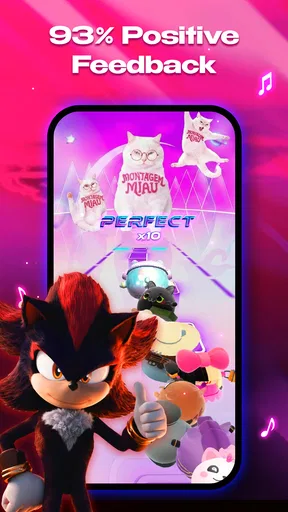
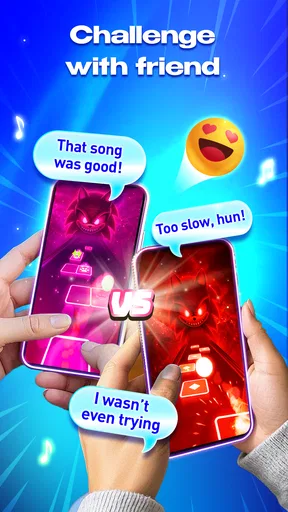
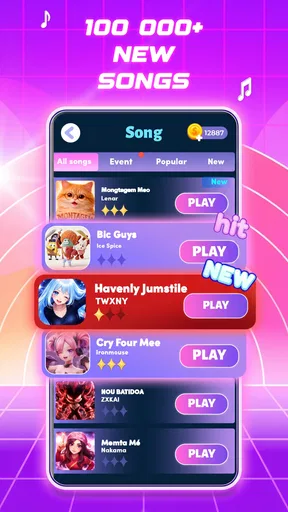
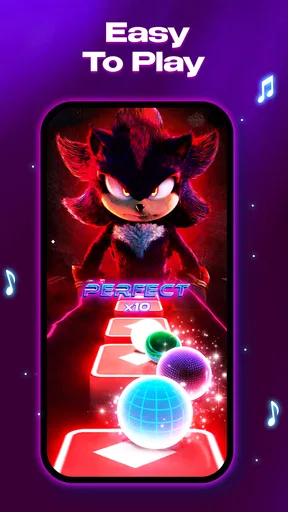
Our Review of Music Hop: Rhythm Ball Games
 Analysis by Appyee
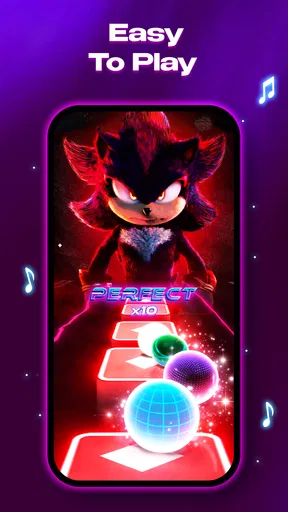
I picked up Music Hop: Rhythm Ball Games expecting a quick music distraction, and that is exactly where it works best. It is a free rhythm game from Beatwave Studio in which I guide a bouncing ball across piano-style tiles while trying to stay with the song. The idea is immediately understandable, but the timing becomes surprisingly demanding once the music speeds up or the pattern stops feeling predictable.
What makes it worth a look is the combination of short sessions, familiar rhythm-game controls, and a music-focused presentation that does not require a long tutorial. I can play for a few minutes while waiting for an appointment, then return later without needing to remember a complicated control scheme. At the same time, this is not a substitute for a full music-learning tool or a deep traditional rhythm game. Its appeal is quick reaction, repetition, and the satisfaction of improving one run at a time.
How the current version feels to play
The current release is version 1.4.21, and the game already feels like a fairly established casual title rather than an unfinished experiment. Its store summary focuses on bouncing across piano tiles to the beat, with trending songs and electronic dance music at the center. In practice, that gives the game a clear identity: I am not managing a character, building a world, or solving a puzzle. I am concentrating on movement, rhythm, and keeping a run alive.
The basic interaction is simple enough for almost anyone to understand. The ball moves through a sequence of tiles, and I use taps or directional input to keep it aligned with the next landing point. The challenge comes from the narrow margin for error. A song may feel relaxed at first, but a few missed beats can quickly turn a comfortable attempt into a restart. That creates a useful pick-up-and-play loop without burying the main action under menus.
I particularly like how the music changes the way I approach each attempt. With a slower or more familiar track, I can focus on the visual rhythm and anticipate the next tile. With more energetic electronic music, I tend to react rather than plan. That difference keeps the game from feeling completely mechanical, even though the core action remains consistent.
A good fit for short, focused sessions
The strongest everyday use case is a short break when I want something more engaging than scrolling but less demanding than a long game. For example, I can play a few attempts during a commute stop or while waiting for food, stop after a failed run, and return later without losing much context. Each session has a natural endpoint, so the game does not ask me to reserve a large block of time.
That convenience also makes it suitable for players who enjoy replaying the same challenge to improve their timing. I often notice that a failure is not random: I tapped early, followed the visual movement instead of the beat, or became careless after a successful sequence. The next attempt then has a clear purpose. I am not simply hoping for a better result; I am correcting a specific mistake.
There is a useful distinction between listening casually and playing actively. If I want music in the background, this is not the right choice because the game demands attention. If I want a compact activity that makes me listen more closely to the rhythm, it does a better job. The music is not merely decoration, but the game still prioritizes fast interaction over a relaxed listening experience.
What the game does better than ordinary music apps
Compared with a standard music player, this title gives me a reason to pay attention to the structure of a track. I start noticing repeated phrases, drops, and changes in intensity because they often affect how I time my movement. That makes even a familiar song feel different when I am trying to use its rhythm as a guide.
Compared with a more elaborate rhythm game, the advantage is accessibility. I do not need to learn several gestures, manage a large roster, or understand a complicated progression system before enjoying the central mechanic. The trade-off is depth. Players who want detailed note charts, instrument-specific play, or a competitive music-simulation experience may find the format too narrow.
It also sits apart from endless runners. Both genres can involve quick reactions and repeated attempts, but this game’s musical pulse is more important than simply avoiding obstacles. When I play well, the run feels connected to the track rather than like a series of unrelated reflex tests. When the visual timing and the audio feel out of sync, however, the limitation becomes much more noticeable.
Small habits that improve consistency
My first useful adjustment was to stop watching only the ball. The next tile and the rhythm around it are more important than the current bounce. Looking slightly ahead gives me time to prepare instead of making a rushed correction at the last instant. This is especially helpful when the pattern becomes less forgiving.
I also found that headphones can make the game easier to read, provided the volume is comfortable. The beat becomes a clearer timing reference, while the visual effects remain useful for confirming the landing. I would not treat this as a requirement, but playing with sound muted removes one of the game’s most valuable cues.
Another practical tip is to treat early attempts as pattern-reading sessions rather than expecting a perfect score immediately. If I reach a difficult section, fail, and remember its shape, the next attempt feels more controlled. Repeating the same track can be more productive than constantly switching songs, because I can separate a timing problem from simple unfamiliarity.
For younger players, the Everyone content rating makes the game approachable in a family setting. I would still encourage sensible screen-time limits, because the retry loop can make “one more attempt” surprisingly easy to say. The game is simple to start, but its quick failures can encourage repetition more strongly than a slower casual title.
What has changed and what that means for players
Beatwave Studio released the game on July 24, 2025, and the current version shows that the project has moved beyond its first public appearance. I see the version number as evidence of ongoing iteration, not as a promise that every possible feature has already arrived. For a new player, that is reassuring: the game is being maintained as a live music experience rather than treated as a one-time release.
The store’s current positioning around trending songs and EDM also suggests that the music selection is part of the product’s continuing identity. That matters because a rhythm game can become stale when its soundtrack stops feeling relevant. I would choose this title partly for that evolving music angle, while remembering that personal taste will determine how much value I get from the available tracks.
Its audience is already substantial, with more than five million installs and an average rating of 4.4 from roughly fifteen thousand ratings. Those figures do not replace personal testing, but they do indicate that the simple bounce-and-tap formula has reached a broad group of players. The game is free, which lowers the barrier to trying it and makes it easier to judge the current experience for yourself.
Existing users should notice the benefit of an actively updated version most in overall polish and continued relevance, rather than in a completely different game concept. The core loop remains easy to describe: choose a musical challenge, guide the ball, miss or succeed, and try again. That consistency is good for people who already enjoy the game, although players hoping for a dramatic reinvention may find the evolution more gradual.
Where the current experience still has friction
The biggest weakness is the tension between musical timing and visual timing. In a rhythm game, even a small feeling of delay can make me question whether I made a mistake or whether the response simply felt late. That uncertainty is more frustrating here than in a conventional arcade game because accuracy is the entire point. A player who is sensitive to timing may need a stable device setup and a quiet environment to get the best impression.
The simple control scheme is also a limitation once the novelty fades. It makes the game welcoming, but it does not offer the expressive range of titles built around multiple lanes, instruments, or complex note patterns. I can improve my reaction and anticipation, yet there are fewer ways to personalize how I play. Someone looking for a long-term mastery system may eventually want more variety than this format provides.
Music licensing and personal preference are practical considerations as well. A game can advertise trending songs and still not match every listener’s taste. If the soundtrack does not appeal to me, the excellent simplicity of the controls cannot fully compensate. I would recommend trying it for the music style as much as for the gameplay, especially if electronic dance tracks are not normally part of your listening habits.
The free entry is convenient, but it also changes how I evaluate the game. I am willing to tolerate a lightweight structure when I can try it without paying first, yet I still expect the central experience to feel fair and comfortable. Players who dislike interruptions, repeated retries, or the general monetization patterns common in free mobile games should approach it cautiously and decide quickly whether the play loop justifies keeping it installed.
Who should install it, and who should skip it
I would recommend it to someone who wants a music game that starts quickly, works well in short bursts, and rewards better timing without requiring specialist knowledge. It is especially suitable for casual players who enjoy electronic music, repeating a level until a difficult section clicks, and games that can be understood within the first attempt.
It is also a reasonable choice for families looking for an age-appropriate music-themed game, although the fast retry cycle means it is better used as a short activity than an unlimited distraction. New rhythm-game players may appreciate the gentle entry point, while experienced players can use it as a lighter alternative between more demanding titles.
I would skip it if my main goal were to learn piano, practice reading music, or explore a deep campaign. The piano-tile presentation should not be confused with genuine keyboard training. I would also choose another game if I wanted a large strategic progression system, multiplayer competition, or highly technical note charts. Music Hop is focused, and that focus is both its strength and its boundary.
What I would watch in future updates
Because version 1.4.21 is the current release, I would pay attention to how Beatwave Studio handles the balance between fresh songs and reliable playability. New music can bring players back, but consistency matters just as much. A track is only valuable when its beat, visuals, and controls work together well enough for improvement to feel deserved.
I would also watch for signs that the game is becoming more welcoming to different skill levels without losing its quick pace. Clearer feedback around missed landings, better support for players who struggle with timing, or more meaningful reasons to revisit completed tracks could extend its life. Those improvements would be useful without changing the uncomplicated identity that makes the game approachable.
For now, I see the title as a polished casual rhythm option rather than a definitive music game. Its free price, Everyone rating, recognizable bounce-based format, and growing audience make it easy to try. My recommendation is strongest for short sessions and players who enjoy improving through repetition. If that sounds like you, install it with headphones, look ahead of the ball, and give the same song several attempts before deciding whether the rhythm clicks.
My final view is positive but measured: Music Hop: Rhythm Ball Games is at its best when treated as a focused musical reflex game, not as a complete music-training experience. Beatwave Studio has a clear foundation, and the current version is accessible enough for newcomers while still offering satisfying timing challenges. I would keep it on my phone for quick breaks, but I would pair it with a deeper rhythm title if I wanted long-term variety or more demanding musical control.
Privacy and Permissions
See what permissions an app requests and how it handles your data.
- Photos/Media/Files
- read the contents of your USB storage
- Storage
- read the contents of your USB storage
- Wi-Fi connection information
- view Wi-Fi connections
- Other
- view network connections, full network access, control vibration, prevent device from sleeping, Google Play license check, read Google service configuration
Verdict
Strengths of Music Hop: Rhythm Ball Games
- Simple one-touch controls are easy for beginners to learn.
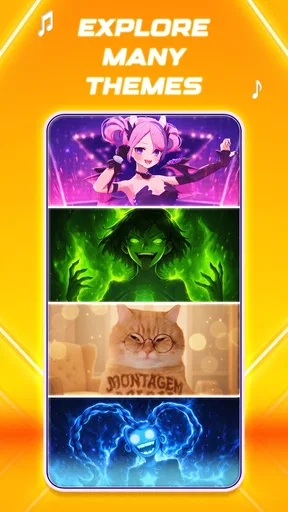
- Bright visuals and rhythmic effects make sessions feel lively.
- Short levels are convenient for quick gaming breaks.
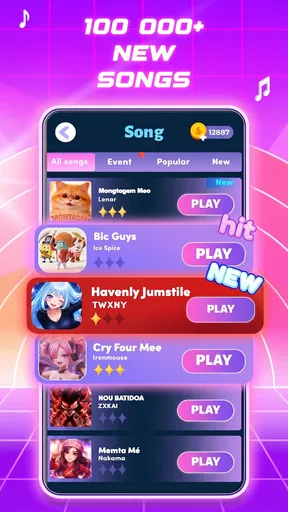
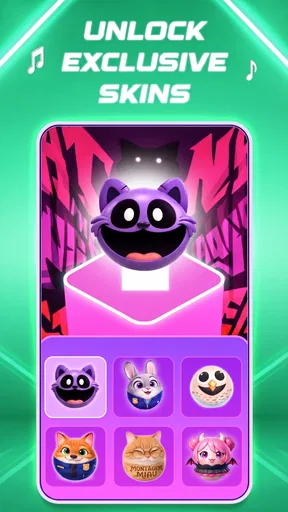
- Unlockable songs and balls provide extra motivation to play.
- Works well for players who enjoy casual rhythm challenges.
Limitations of Music Hop: Rhythm Ball Games
- Timing can feel inconsistent when songs become especially fast.
- Repeated patterns may make the gameplay feel predictable over time.
- Frequent ads can interrupt the flow between attempts.
- Some content may require purchases or extended grinding to unlock.
- The game may drain battery during longer sessions with effects enabled.
Other Releases by Beatwave Studio
View All
Magic Level 9 Music Piano Game
Music4.7

Magic Cat Piano: Music Tiles
Music4.7
Similar Picks in This Category
View All
Tiles Hop Music & Ball Game
AMANOTES PTE. LTD.4.3

Magic Tiles 3™ - Piano Game
AMANOTES PTE. LTD.4.6

Real Piano
Bilkon3.7

Piano Game: Classic Music Song
Dream Tiles Piano Game Studio4.0

Smash Colors: Music Ball Rush
BADSNOWBALL HONGKONG LIMITED4.2

Piano Music Go-EDM Piano Games
Joy Journey Music Games4.5
Frequently Asked Questions
What is Music Hop: Rhythm Ball Games?
Music Hop: Rhythm Ball Games is a music-based arcade game in which you control a bouncing ball and guide it across platforms in time with the beat. Each track turns the level into a reflex challenge, requiring accurate swipes, quick reactions, and good rhythm. The game combines colorful visuals, simple controls, and progressively faster gameplay for short, engaging sessions.
How do you play Music Hop: Rhythm Ball Games?
Gameplay is designed to be easy to understand, although mastering later stages can be demanding. You generally swipe or tap to move the ball between platforms while following the rhythm of the selected song. Staying on the tiles helps you continue the run, while missed movements can end the attempt. Timing is more important than speed, especially during difficult sections.
Does Music Hop: Rhythm Ball Games include many songs or music styles?
The game offers a selection of rhythm-focused tracks and levels intended to provide different moods and challenges. The available music may vary according to the version, updates, region, and in-game progression. Players should check the current store listing for the latest song information. Some content may also require unlocking, watching advertisements, or making optional purchases.
Is Music Hop: Rhythm Ball Games free to download and play?
Music Hop: Rhythm Ball Games can generally be downloaded without an upfront purchase, but free access may include advertisements, optional in-app purchases, or limitations on certain content. Depending on the version, purchases may provide extra songs, cosmetic items, currency, or an ad-free experience. Review the Google Play or App Store details before downloading, particularly if children use the device.
Can Music Hop: Rhythm Ball Games be played offline?
Some basic gameplay may work without a continuous internet connection, especially after the necessary game files and music content have been loaded. However, advertisements, updates, leaderboards, cloud features, and certain tracks may require internet access. Offline behavior can differ between Android and iOS versions, so it is best to test the game after installation rather than assume every feature is available offline.
Play our best games!


